
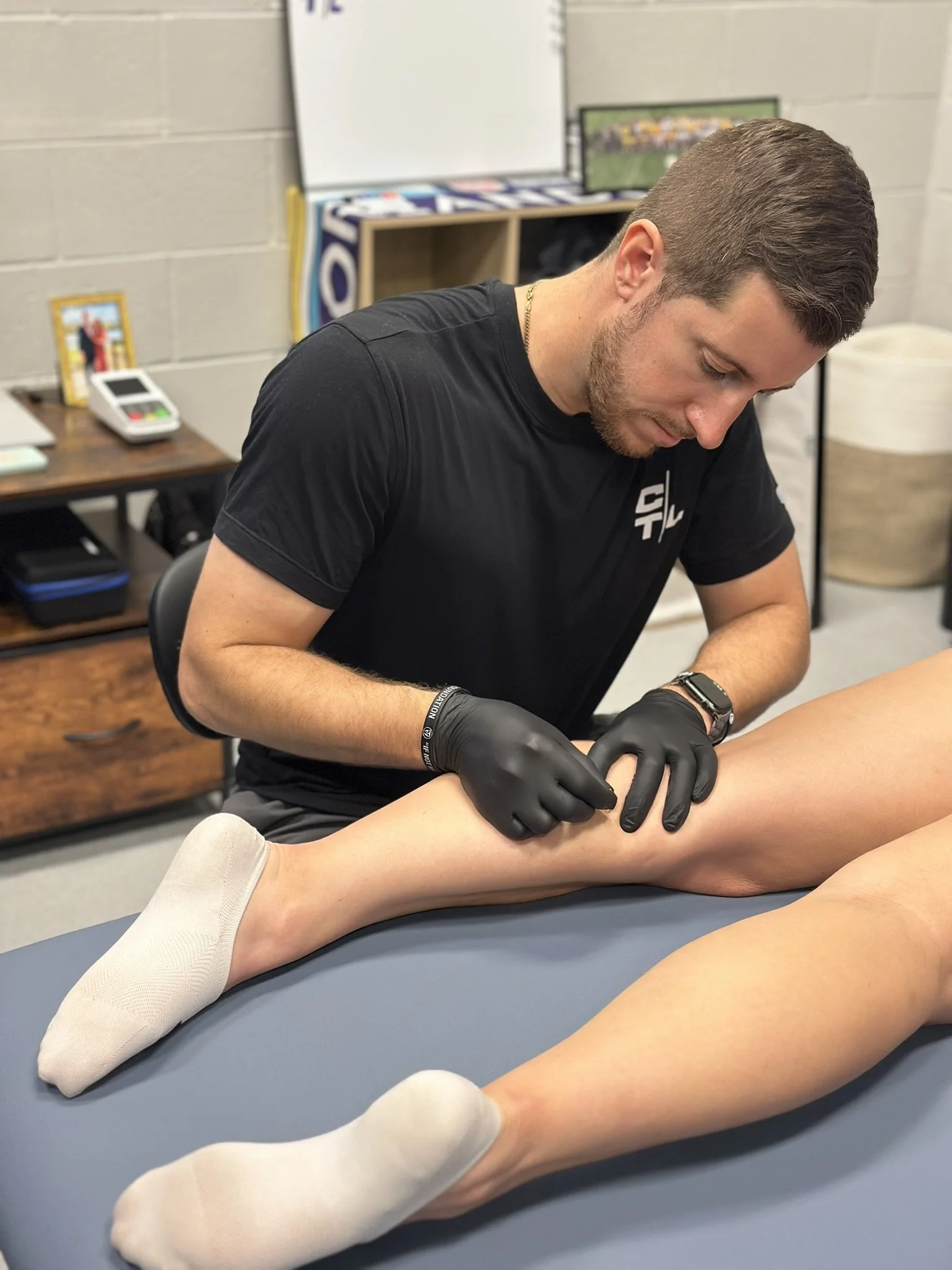
Dry Needling
Based in Winter Park - Serving the Greater Orlando Area
Dry needling is a skilled Physical Therapy technique often used in sports Physical Therapy sessions to help reduce pain, improve mobility, and restore normal muscle function. At Cross the Line Physical Therapy and Performance, dry needling is provided by a licensed Physical Therapist and is used thoughtfully as part of a comprehensive rehabilitation or performance plan, never as a one-size-fits-all solution.
What is dry needling?
Dry needling involves the use of a very thin, sterile needle to target areas of muscle tightness or dysfunction, often referred to as trigger points. These areas can contribute to pain, stiffness, or altered movement patterns.
The goal of dry needling is not the needle itself, but the physiological response it creates, helping muscles relax, improving local blood flow, and allowing normal movement to return more efficiently.
For more information, you can also see our Dry Needling Blog Post and FAQ pages.
What are the benefits of dry needling?
When used appropriately, dry needling can help:
Reduce muscle tension and pain
Improve joint and soft tissue mobility
Decrease sensitivity in irritated muscle tissue
Enhance the effectiveness of exercise and movement-based therapy
Is dry needling safe?
Yes. Dry needling is considered a very safe intervention when performed by a properly trained and licensed Physical Therapist. At Cross the Line, strict safety and hygiene standards are followed, and each patient is thoroughly evaluated to ensure dry needling is appropriate for their condition and goals.
Most patients describe the experience as far less uncomfortable than they expected.
Dry needling as part of Physical Therapy - Not a standalone treatment
Dry needling is never used as a standalone treatment. Instead, it is integrated into a larger plan that may include strength training, mobility work, movement retraining, and sport-specific or activity-specific exercise.
Similar to any passive intervention we use, dry needling is always followed up with active movements through full ranges of motion to ensure our patients “own” their improvements. Think, long-term improvements rather than short-term “feel-good” treatment.
When indicated, dry needling can help reduce pain or muscle guarding, allowing patients to move better and get more out of their rehabilitation or performance program.
Is Dry needling required? Are there alternatives?
No. Dry needling is always optional. It is never mandatory, and it is not the right tool for everyone.
If a patient prefers to avoid needles, there are many effective treatment alternatives that can be used to address pain, mobility, and muscle function. Treatment plans are always tailored to individual comfort levels, preferences, and goals.
If you’re curious whether dry needling may be appropriate for your situation, we’re happy to talk it through. Give us a call or schedule an appointment to discuss your goals and determine the best approach for your care.
Have more questions about dry needling? Visit our Dry Needling FAQ for detailed answers about what to expect, safety, and more.