
Blood flow restriction training (BFRT) has gained significant attention in recent years within both the fitness and rehabilitation worlds. Although its origins date back to the 1960s, advances in research and equipment have led to its increased use in sports performance and physical therapy settings.
BFRT involves the use of specialized compressive cuffs applied to the upper or lower extremities to partially restrict arterial blood flow while limiting venous return. This unique stimulus allows individuals to achieve meaningful improvements in muscle strength and hypertrophy while training with significantly lighter loads than traditional resistance training.
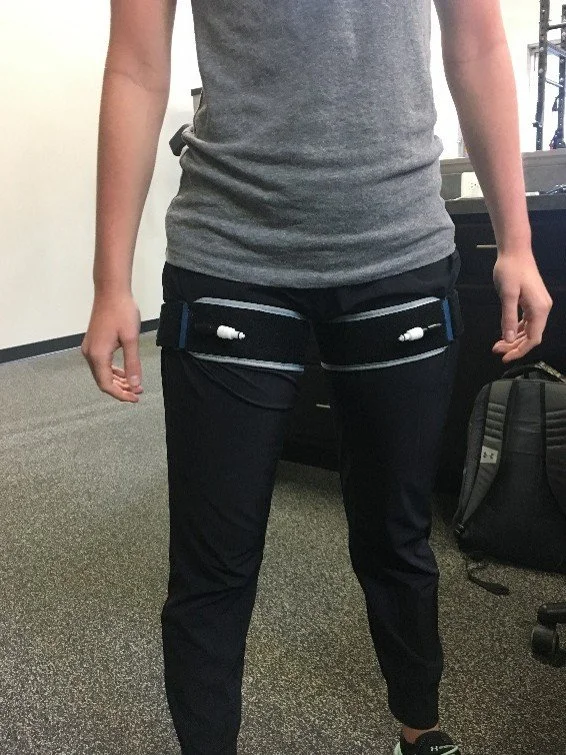
Blood flow restriction cuffs applied to the lower extremities in preparation for blood flow restriction training
Why Use Blood Flow Restriction Training?
Traditional heavy resistance training (HRT) typically requires loads of 65–70% of one-repetition maximum (1RM) or greater to stimulate increases in muscle strength and size. While effective, heavy loading is not always appropriate for every individual or every phase of training or rehabilitation.
Blood flow restriction training allows similar improvements in strength and hypertrophy using loads as low as 10–30% of 1RM, making it a valuable tool when heavier resistance is not feasible due to pain, injury, surgical precautions, or recovery demands.
How Does BFRT Work?
While the exact mechanisms behind BFRT are still being investigated, several well-supported theories help explain its effectiveness.
One theory suggests that restricting venous return creates a localized metabolic environment within the working muscle, increasing the accumulation of metabolites and promoting a stronger anabolic response. Another theory proposes that BFRT accelerates fatigue of slow-twitch muscle fibers, resulting in earlier recruitment of larger, fast-twitch muscle fibers that are typically engaged only during higher-intensity exercise.
Together, these effects allow low-load exercise to produce training adaptations similar to those seen with traditional heavy resistance training.

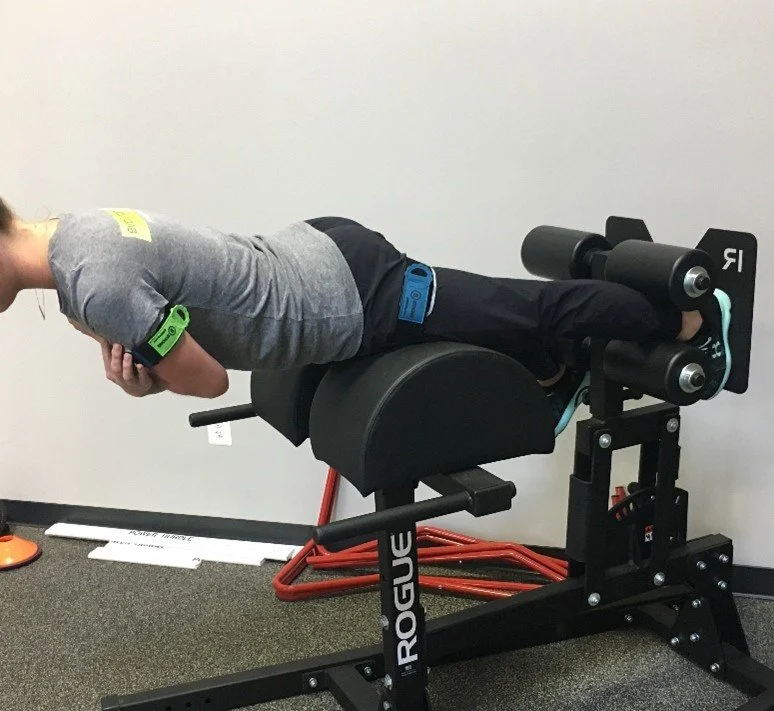
BFRT utilizing both upper extremity and lower extremity blood flow restriction cuffs
Who Can Benefit from Blood Flow Restriction Training?
BFRT can be beneficial for a wide range of individuals, including athletes, older adults, and patients undergoing physical therapy.
Athletes
BFRT is most effective when used as a supplement to traditional heavy resistance training rather than a replacement.
Low-load BFRT may allow athletes to maintain or improve strength and muscle mass during in-season training while minimizing muscle soreness and overall tissue stress.
It can also be useful during deload periods or return-to-sport phases.
Older adults
BFRT offers a valuable option for older adults who are unable or apprehensive about performing heavy resistance training.
Research shows BFRT can improve muscle strength and hypertrophy in older adults, helping combat age-related muscle loss.
Maintaining muscle mass is closely linked to improved bone health, cardiovascular health, balance, and independence, as well as reduced fall risk.
Patients in Physical Therapy
Many patients are unable to tolerate heavy resistance due to pain, injury, or post-surgical restrictions.
BFRT allows patients to train at lower loads while still promoting strength gains.
It can be particularly useful during early rehabilitation phases following surgery, when protecting healing tissues is essential.
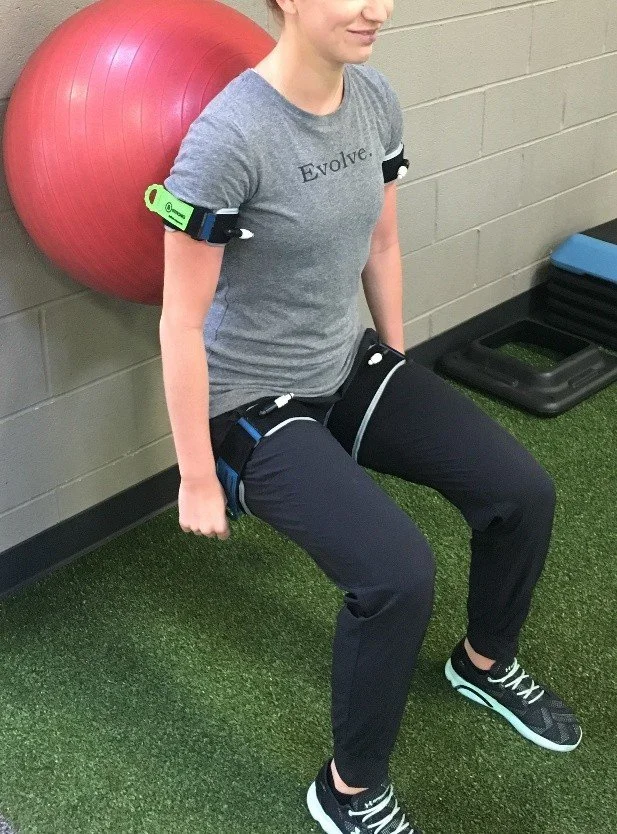
Patient using lower extremity blood flow restriction cuffs for a wall sit exercise as part of their physical therapy program
Examples of Exercises Performed with Blood Flow Restriction
Blood flow restriction training can be applied to a wide variety of exercises, including:
Upper extremity movements such as push-ups and biceps curls
Lower extremity exercises including squats, wall sits, and posterior chain movements
When appropriately prescribed, BFRT can be seamlessly integrated into both rehabilitation and performance training programs.
Is Blood Flow Restriction Training Safe?
When applied correctly, BFRT is considered a safe and effective mode of exercise. Numerous studies report a very low incidence of serious adverse events, with non-serious side effects such as mild bruising occurring infrequently. Some research even suggests BFRT may improve peripheral blood circulation over time.
However, BFRT is not appropriate for everyone. Contraindications may include, but are not limited to:
History of deep vein thrombosis (DVT)
Peripheral vascular disease
Impaired sensation
Impaired cognition or communication
Cancer
Open or healing wounds at or distal to the cuff site
Active infection in the extremity
Severe or uncontrolled hypertension
Anemia
Significant swelling or lymphedema
Hemophilia
Use of medications that increase clotting risk
Although BFRT is generally safe, physician clearance is recommended prior to use, regardless of overall health status.
Improper application of occlusive devices is one of the greatest risk factors for adverse effects. For this reason, blood flow restriction training should only be performed under the guidance of a properly trained healthcare or fitness professional.
